Deciding to restore your smile is a big step toward better health and confidence. If you are missing teeth, you might be looking for dentures in London to help you eat, speak, and smile with ease. Understanding the differences between full and partial dentures is the first step in finding the perfect fit for your lifestyle.
At its simplest, dentures are custom-made replacements for missing teeth. They are designed to look like your natural teeth and the surrounding gum tissue. Depending on how many teeth you have lost, your dentist will recommend one of two main types.
What are Full Dentures?
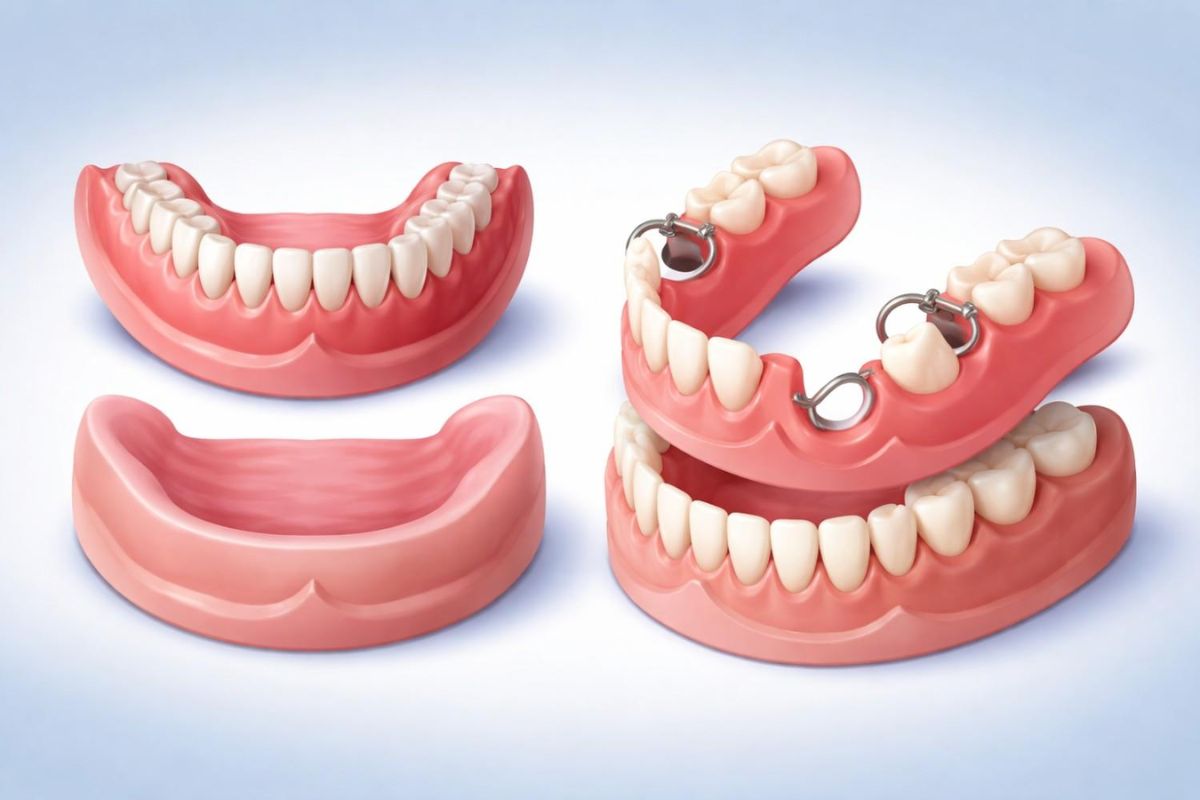
Full dentures, also known as complete dentures, are used when all the teeth in the upper or lower jaw are missing. They sit directly on top of the gums.
- Standard Full Dentures: These are made after the teeth have been removed and the gum tissue has healed.
- Immediate Dentures: These are prepared in advance and placed as soon as the teeth are removed, so you never have to be without teeth during the healing phase.
What are Partial Dentures?
Partial dentures are used when you still have some of your natural teeth remaining. They fill the gaps created by missing teeth and prevent your other teeth from shifting position.
- They usually consist of replacement teeth attached to a pink or gum-coloured plastic base.
- They often use a metal framework or clips to connect to your natural teeth for stability.
Comparison: Full vs. Partial Dentures
To help you decide, here is a quick look at how these two options compare:
| Feature | Full Dentures | Partial Dentures |
| Number of teeth replaced | Entire arch (top or bottom) | One or more missing teeth |
| Support system | Suction or dental implants | Natural teeth and metal clasps |
| Stability | Can slip if not fitted well | Very stable due to natural anchors |
| Purpose | Full restoration of function | Fills gaps and protects remaining teeth |
Factors to Consider for the Best Fit
Choosing the right fit involves more than just counting teeth. When you visit a dentist in London, they will look at the health of your jawbone and your remaining teeth.
If your remaining teeth are healthy and strong, a partial denture is often the better choice because it helps preserve your natural bite. However, if your remaining teeth are decayed or loose, it might be more cost-effective and healthier in the long run to transition to a full denture.
Your lifestyle also matters. Some patients prefer implant-supported dentures for extra security. These are full dentures that “snap” onto posts placed in the jaw, so they do not move when you chew tough foods.
Caring for Your Dentures
No matter which type you choose, keeping them clean is vital for your oral health. You should:
- Rinse your dentures after eating to remove food bits.
- Brush them daily with a soft-bristled brush and non-abrasive cleaner.
- Soak them overnight in water or a mild denture solution.
- Visit a dentist near you regularly to check the fit.
Trust Horizon Dental Care for Your Smile
At Horizon Dental Care, everyone deserves a smile they feel proud of. Located in the heart of London, Ontario, our team focuses on providing comfortable, natural-looking tooth replacement options. Whether you need a simple partial or a complete set of high-quality dentures, we use the latest technology to ensure a precise fit.
We take the time to listen to your concerns and find the solution that fits your budget and health goals. If you are ready to reclaim your confidence, book an appointment with us today. Let us help you find the best fit for your vibrant new smile.
Frequently Asked Questions
How long do dentures last?
Most dentures last between 5 and 7 years. Over time, your mouth changes shape and the denture material wears down, so they may need to be relined or replaced to keep a tight fit.
Will dentures change how I speak?
It may take practice to speak clearly at first. Reading aloud or repeating difficult words can help your tongue get used to the new appliance, and any slight lisp usually disappears quickly.
Can I sleep with my dentures in?
It is usually recommended to remove them at night. This gives your gum tissues a chance to rest and prevents oral infections or irritation that can happen from constant wear.
How do I know if my dentures fit properly?
Your dentures should feel secure and not cause sharp pain. If you notice they slip when you talk or develop sore spots in your gums, you should visit a professional for an adjustment.
Can I still eat my favourite foods?
Yes, though it takes a bit of time to adjust. Start with soft foods cut into small pieces. As you get comfortable, you can return to a normal diet, though you should always be careful with very sticky or hard items.